Free Shipping on Orders Over $50

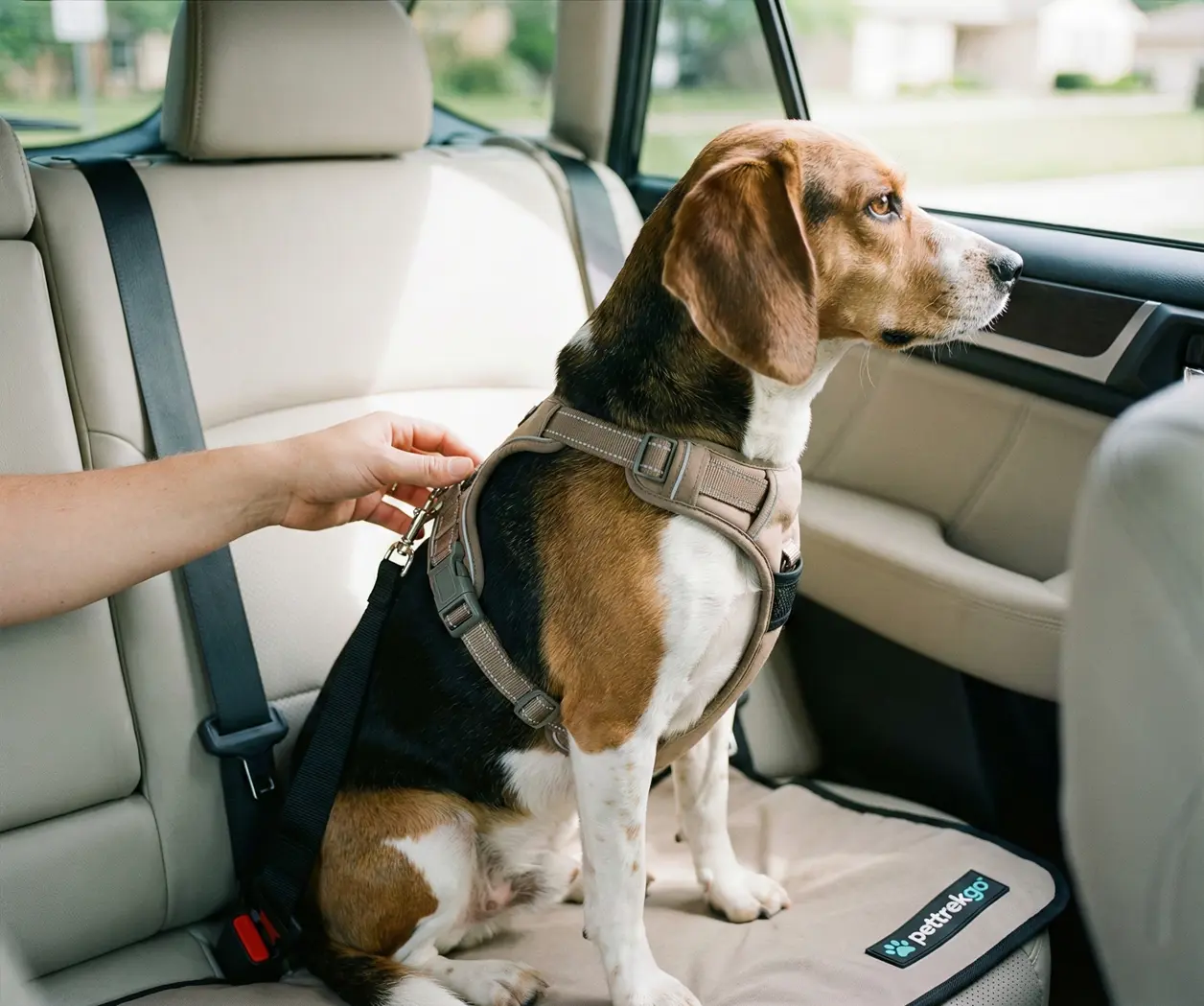
The Truth About Car Safety: Why Your Dog Needs a Seatbelt & How to Choose One

We all love the image of a happy dog with its head out the car window, ears flapping in the breeze. It feels like freedom. It looks like fun.
But as pet owners, we need to have a serious conversation about what happens inside the car when we hit the road. You wouldn’t let a child ride without a seatbelt, yet millions of dogs travel unrestrained in cars every single day.
At pettrekgo, we believe that safety isn’t optional. Buckling up your dog isn’t just about following rules; it’s an act of love that could save their life—and yours.
Here is why a dedicated dog seatbelt system is essential for every road trip, short or long, and how to choose the right one for your furry co-pilot.
The Dangers of Riding Unrestrained
Many owners think their dog is safe just sitting in the back seat because “they are a good rider” or “I drive carefully.” But accidents happen unexpectedly, and physics doesn’t make exceptions for good dogs.
Here are the three biggest risks of driving with an unrestrained pet:
1. Driver Distraction (The Everyday Risk)
This is the most common danger. A dog trying to climb into the front seat, barking at something outside, or suddenly vomiting can take your eyes off the road for critical seconds. According to the AAA, taking your eyes off the road for just two seconds doubles your risk of a crash. A restrained dog allows you to focus on driving.
2. The Projectile Effect (The Crash Risk)
In a collision, or even just a sudden hard brake at 30 mph, an unrestrained 60-pound dog becomes a projectile exerting roughly 2,700 pounds of force. This can cause catastrophic injury to the dog and act as a deadly missile striking passengers in the front seat. A seatbelt tether keeps them securely in place, minimizing impact.
3. Escaping After an Accident
Car accidents are terrifying. Windows break, and doors pop open. A frightened, injured dog’s first instinct is to run. Many pets survive the initial crash only to become lost or hit by other traffic in the chaos that follows. A secure tether ensures they stay inside the vehicle until you can safely retrieve them.
How to Choose the Right System
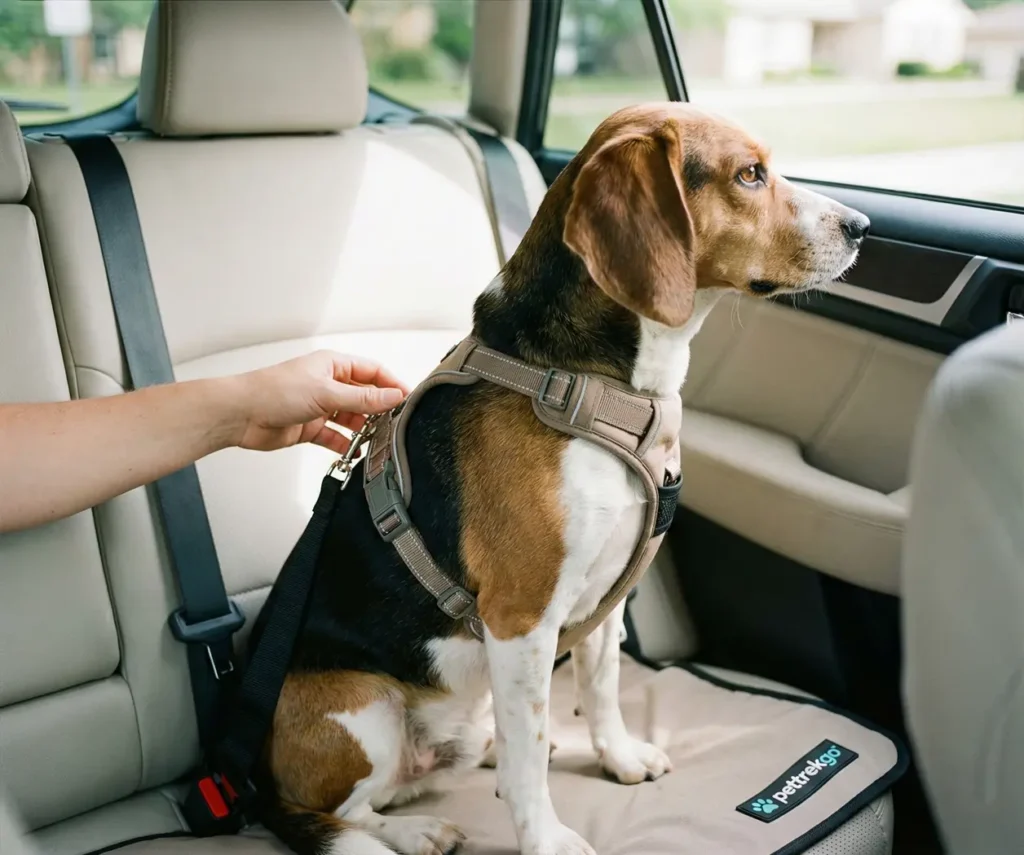
Now that you understand the “why,” it’s crucial to understand the “how.” NEVER attach a seatbelt tether directly to your dog’s neck collar. In a sudden stop, this could cause severe neck injury or strangulation.
A safe system always requires two parts:
Part 1: A Crash-Tested Travel Harness
You need a harness specifically designed for car travel. Unlike standard walking harnesses, travel harnesses feature:
- Wider, padded chest plates to distribute force evenly across their strongest bones.
- Reinforced stitching and durable nylon webbing that won’t snap under pressure.
- Strong metal hardware points for leash attachment.
Part 2: The Seatbelt Tether
This connects the harness to your car. The most common and secure type clicks directly into your car’s existing female seatbelt buckle (just like a regular seatbelt). Another option loops around the backseat headrest.
- Gear Tip: Look for a tether made of heavy-duty nylon, similar to actual human seatbelt material, with a robust, swivel-locking carabiner to attach to the harness.
Safety is a Habit
Buckling up your dog should be as automatic as buckling up yourself. It might take a few rides for your dog to get used to not being able to roam around the car, but they will quickly adjust and often settle down faster once they realize they are secure.
Don’t wait for a close call to take action. Secure your best friend today for peace of mind on every mile of your journey.
Ready to secure your co-pilot? Browse our collection of durable Dog Travel Seatbelts & Harnesses designed for safe adventures.